Same shop, different smiths
For a while now I've had a hard time explaining to other designers why designing with AI fascinates me.
I'd say things like "the output is directly tied to how you manage it," or "you can direct it and focus it really efficiently." All true, and it meant nothing to anyone. People nodded. They didn't get it, and I don't blame them. I'm not sure I would have either.
I've been looking for a better way to describe how I actually use it, because I use it a lot, and I think I use it well. It shows in how fast the work gets made, and more importantly in how good it is. It's also the most fun I've had designing in years. To get an agent to design the way I would, I've had to put into words how I think about design, and it turns out I didn't fully know until I had to explain it to something that takes every word literally. And still, I feel like I'm only getting started.
So take this as a reflection in progress, where I've landed so far. The analogy I keep coming back to is a blacksmith.
The person at the anvil
Here's how I see it. I'm the smith. AI is the shop. In the shop I make two kinds of things: the tools, and the work itself, the sword or the helmet.
Everyone has access to the same shop now. That's the part people fixate on. But put two blacksmiths in the same shop and they'll make different things. The work is tied to the person at the anvil. That part of design hasn't changed, and I don't think it will.
It cuts the other way too. If you're a good smith and your swords and helmets still come out bad, it probably isn't you. It's your shop. Everyone walks into the same building, but the bench, the hammer and the tongs are yours to set up, and not everyone puts the time in.
That's the other half, and it matters just as much. A smith with no tools makes nothing. The work depends on the tools, and a good smith spends a surprising amount of time on them: the heat of the forge, the face of the hammer, the stone that sharpens the blade. Traditionally, they made most of those tools themselves.
Designers haven't worked like that. We bought ours.
Tools built for everyone
Figma and Photoshop are factory-made tools, forged by someone else and sold to all of us. They're excellent, and most of us have spent our careers being creative inside them. But because we all had the same tools, we all had the same parameters.
Tobias van Schneider (@vanschneider) said it recently: "the systemization of product design was mainly due to the limitation of resources and feasibility… it was a pure economic choice." Benji Taylor (@benjitaylor) put the other half of it well: "We're going to look back at one-size-fits-all software the way we look at the three-channel TV era."
What makes AI different to me is that the shop makes it cheap enough to forge a tool for one person. Think about tongs. A smith can buy a pair off the shelf, made to fit any hand and hold most things reasonably well, or forge their own: the handles shaped to their grip, the jaws shaped to hold the exact piece on the anvil that day. Smiths forge new tongs for new work all the time, because a piece that slips in the jaws ruins the strike. That's the level of fit we have now.
Polish the hammer, focus the swing
Smiths often work with a striker. The smith holds the piece and taps the spot with a small hand hammer. The striker brings the sledge down exactly there. The striker supplies the force. The smith decides where it lands.
That's the closest thing I've found to working with an agent. It does a lot of the swinging now, and it hits wherever you point, even when you point badly. It won't question you. And it won't always reach for what's on your bench, unless you point it there.
Which means two things matter. First, the hammer face. A smith keeps it polished so it doesn't leave ugly dents in the work. For me that's the setup the agent carries into every job: my references, my tools, how I like to work. A rough hammer leaves marks on everything it touches.
Second, and I think this is the bigger one, where it lands. The striker swings, but the smith's tap decides the spot. For me that's the direction I give for this piece, this time. A polished hammer swung at the wrong spot still ruins the piece.
In practice
I work at an established company. It has a look, a feel, a tone, a product, and years of work behind it from a lot of talented designers. There's a deep well of reference to pull from. Say the company is building a new product for a new market, and I'm designing it.
I don't open an agent and say "design me this feature."
At that point the swing could land anywhere: across look, audience, tone, nearly everything. It'll swing anyway, and the work lands wherever it lands, which is why so much AI work looks like it came from nowhere in particular.
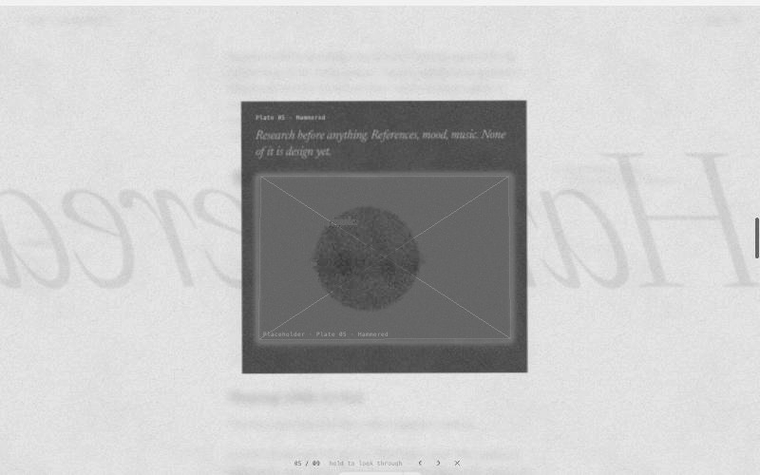
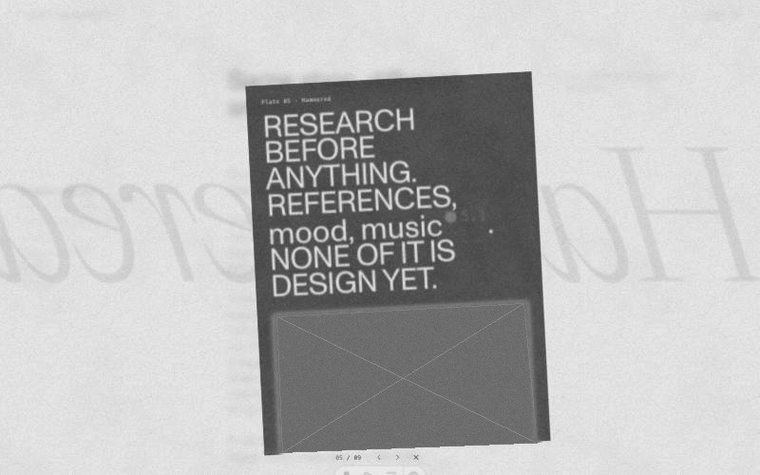
So before I ask for anything, I tap the spot. I have the agent learn the current flows of the entire product. I have it read the brand guidelines that already exist for the new product. I send out several agents to research the market, the competition, what's best in class, and to gather mood: images, feelings, even music. None of it is design yet. All of it narrows where the swing can land.
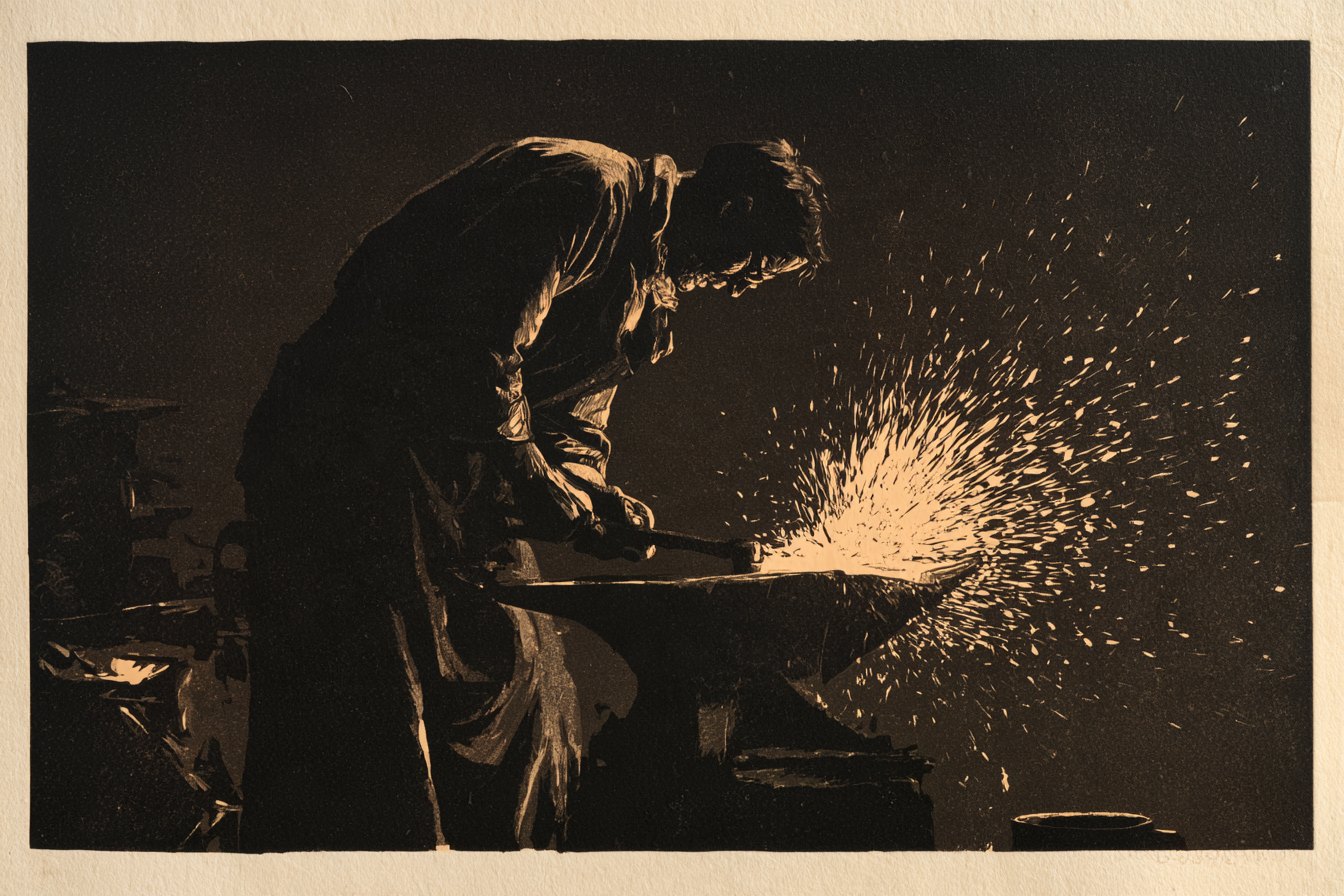
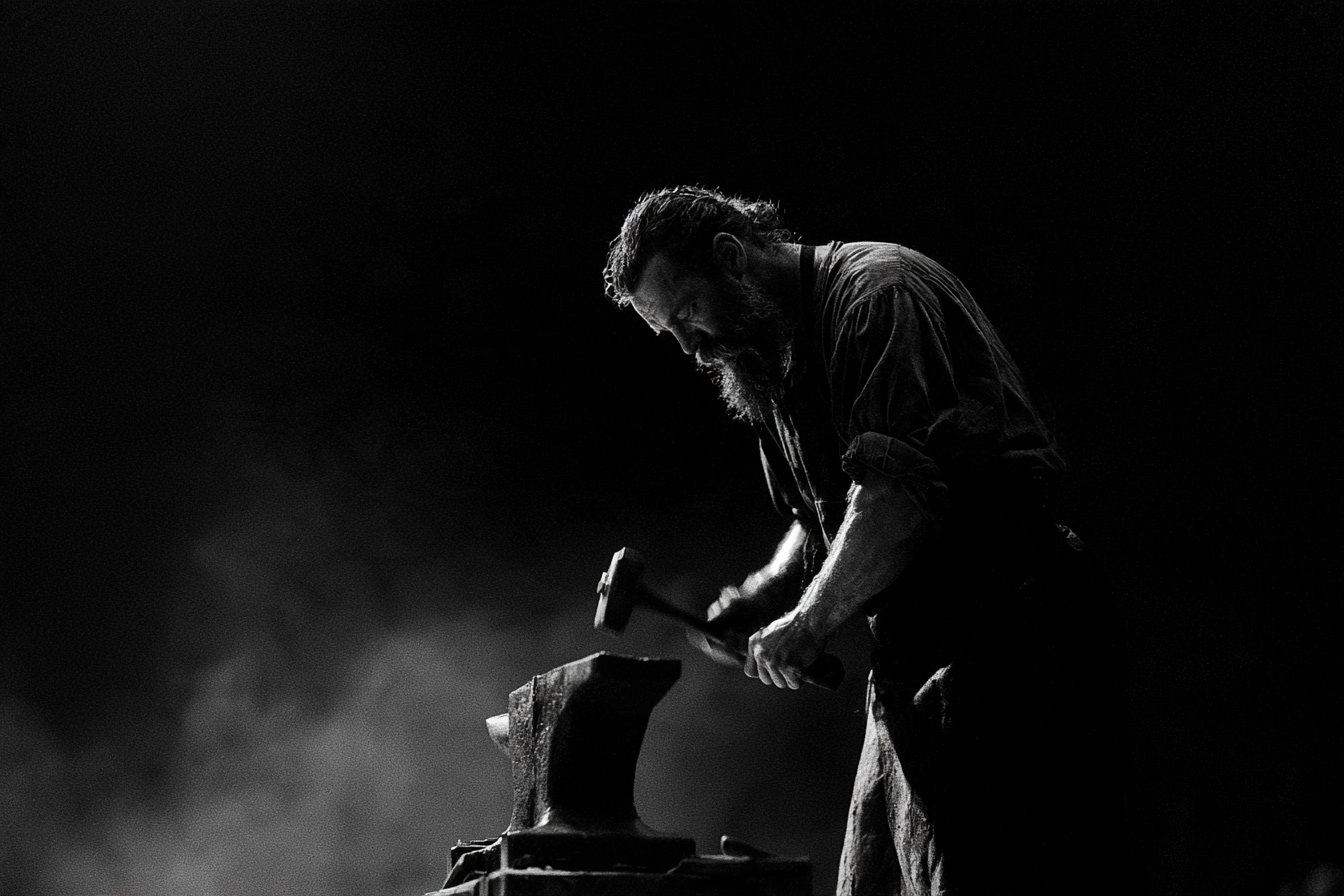
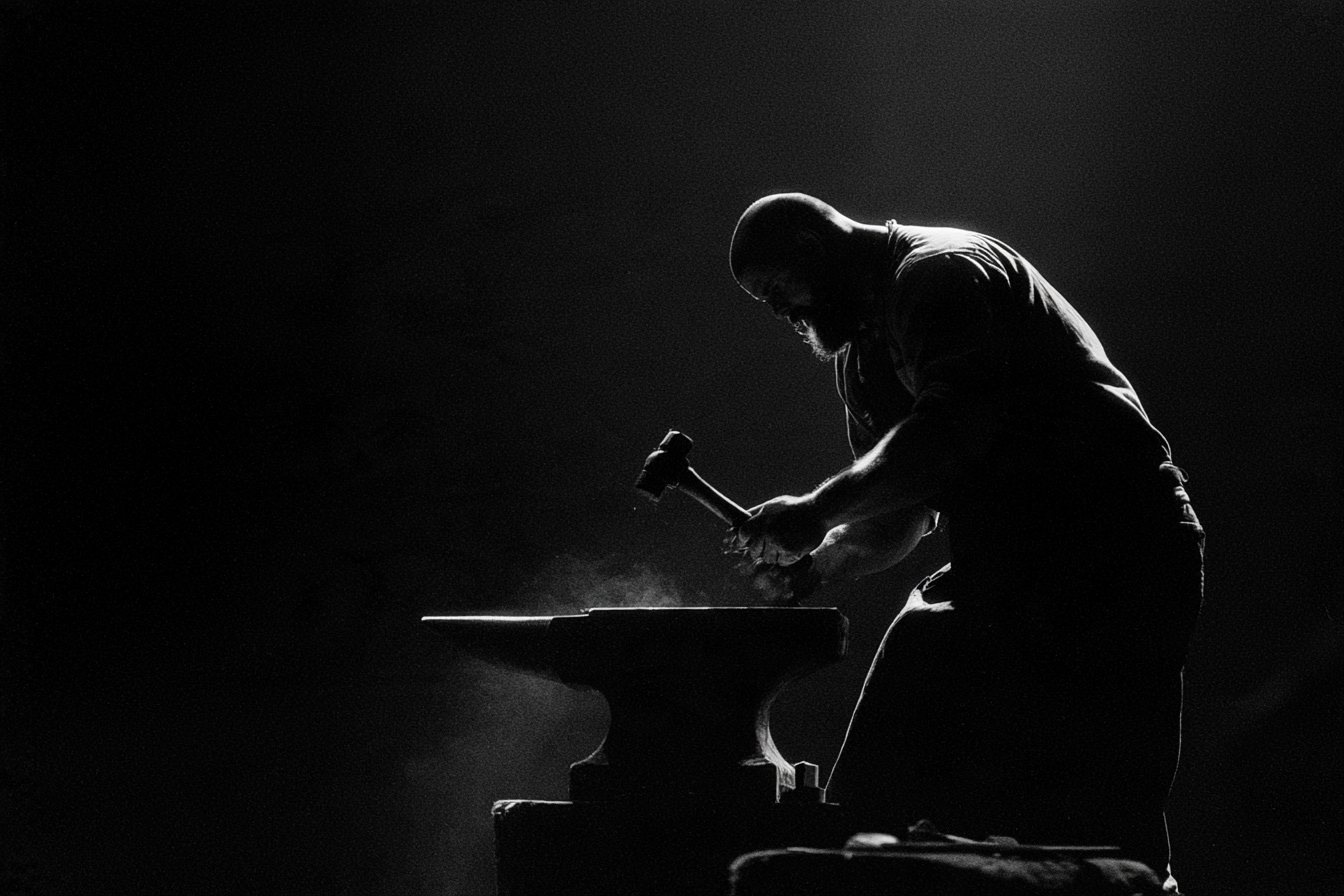
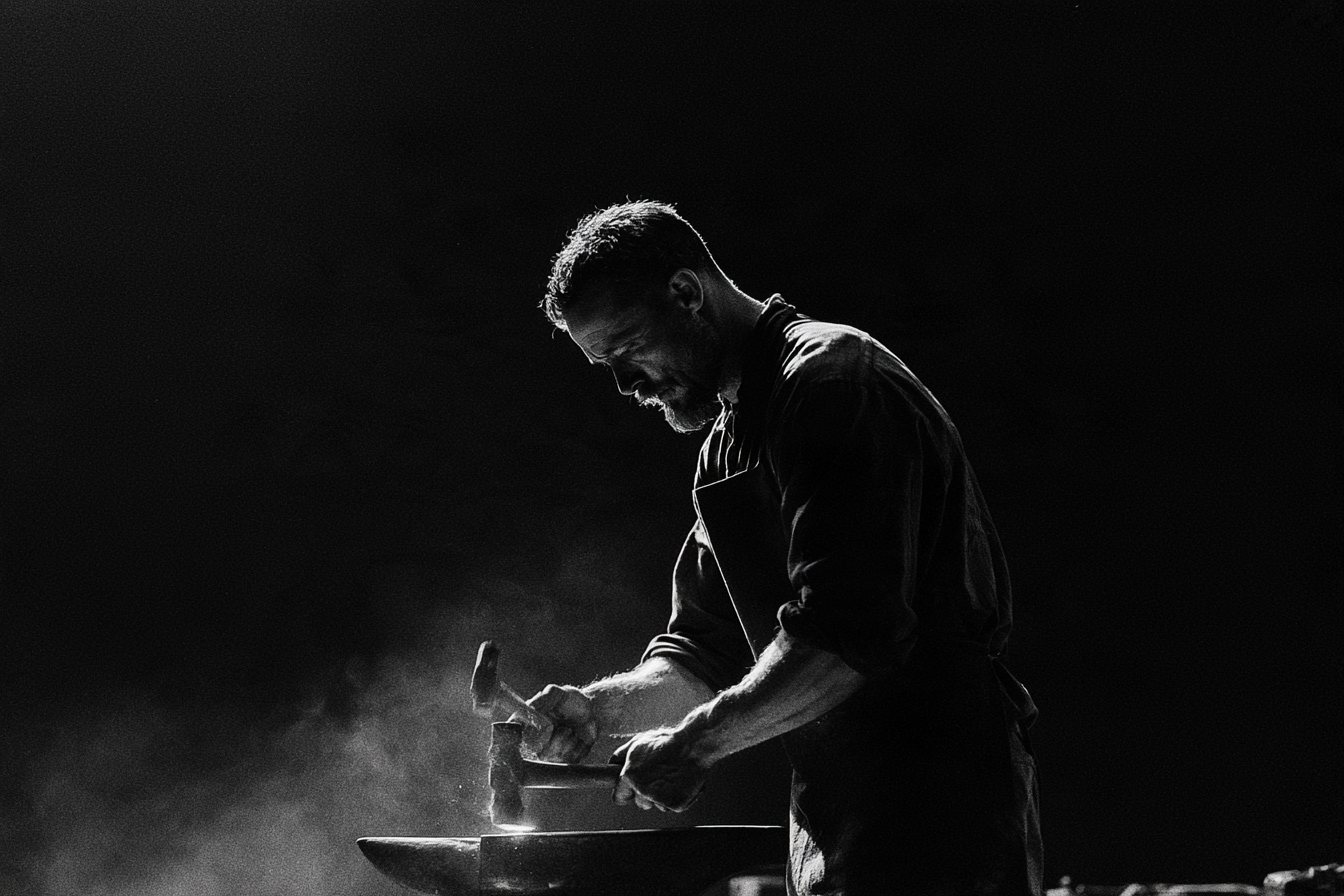
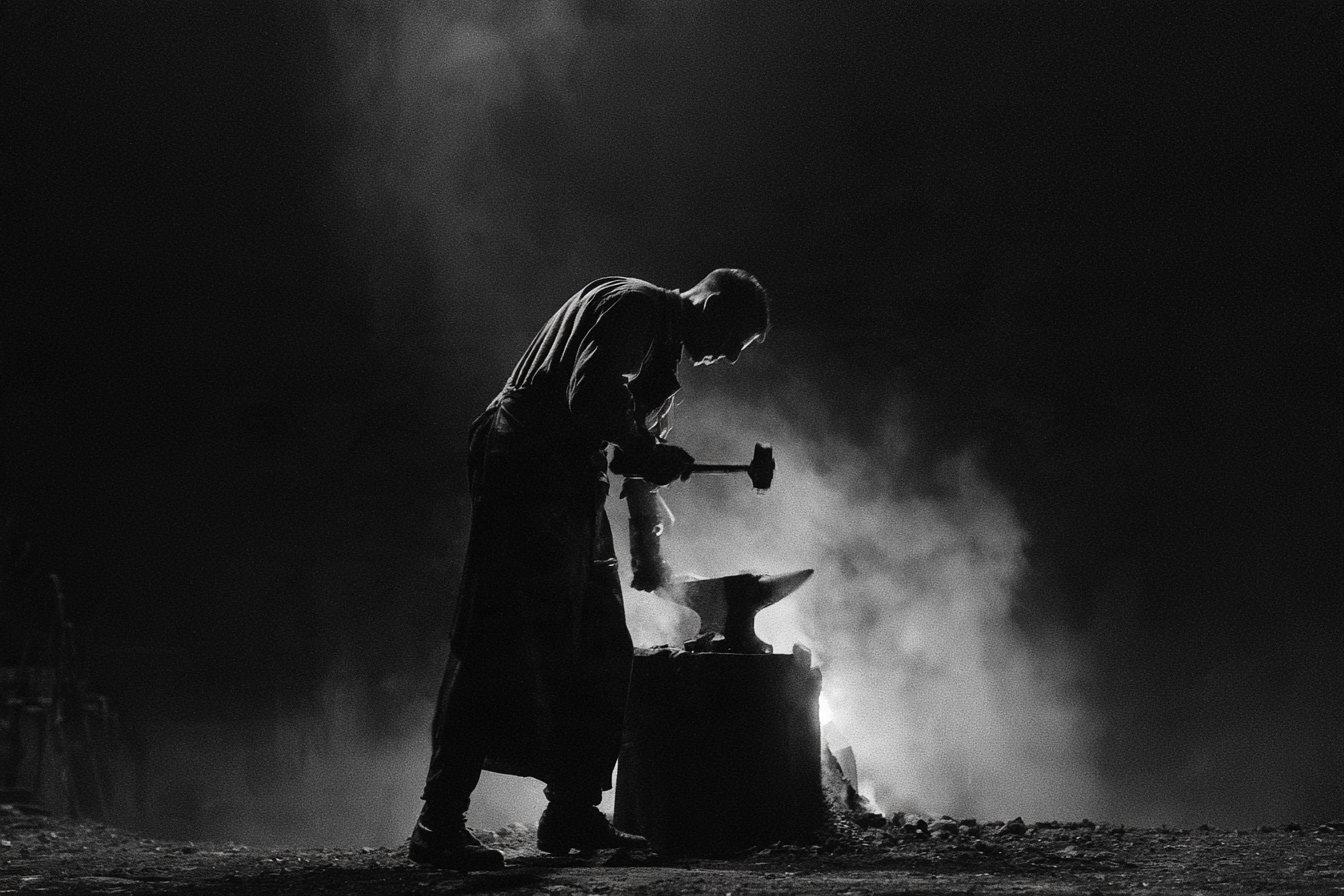
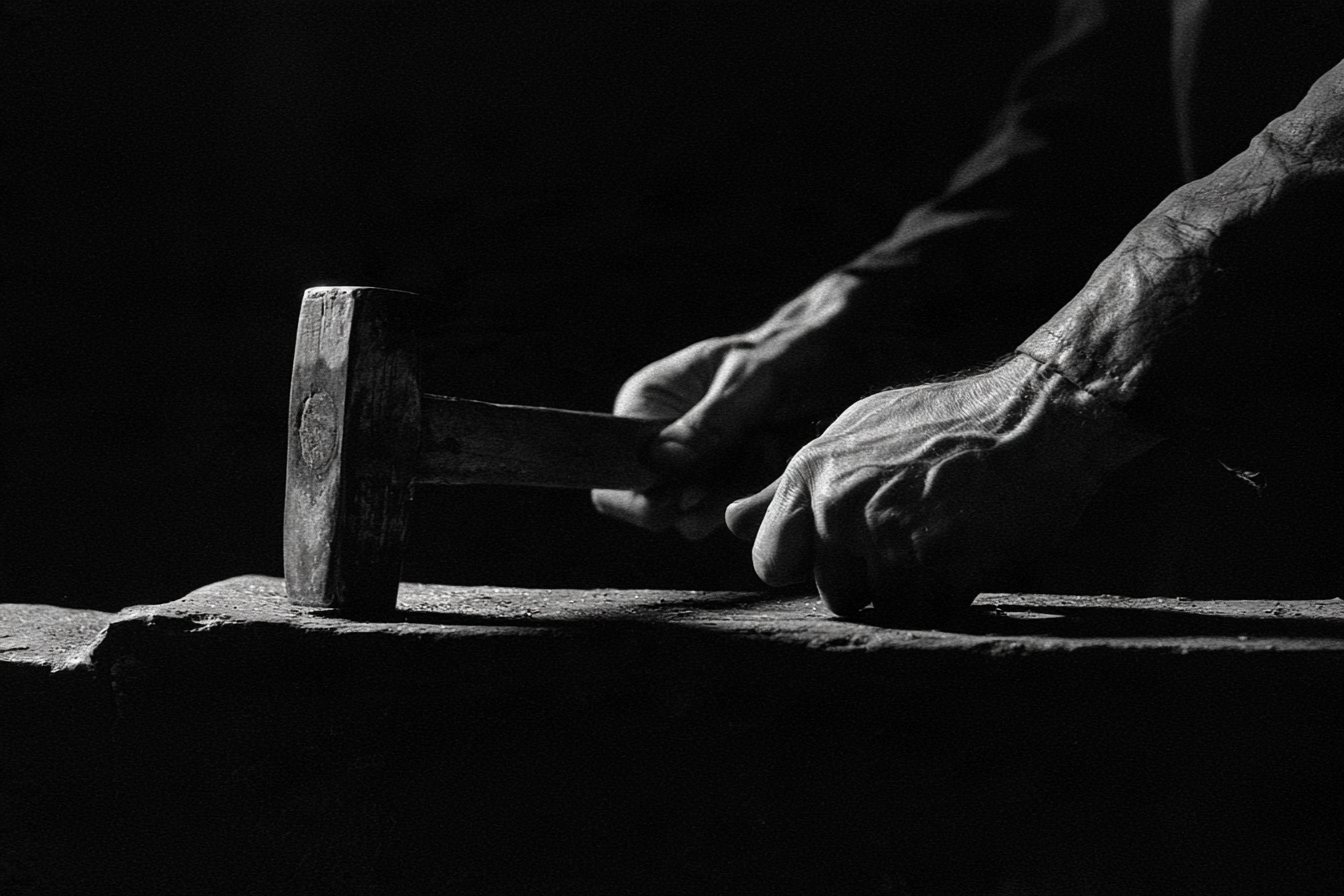
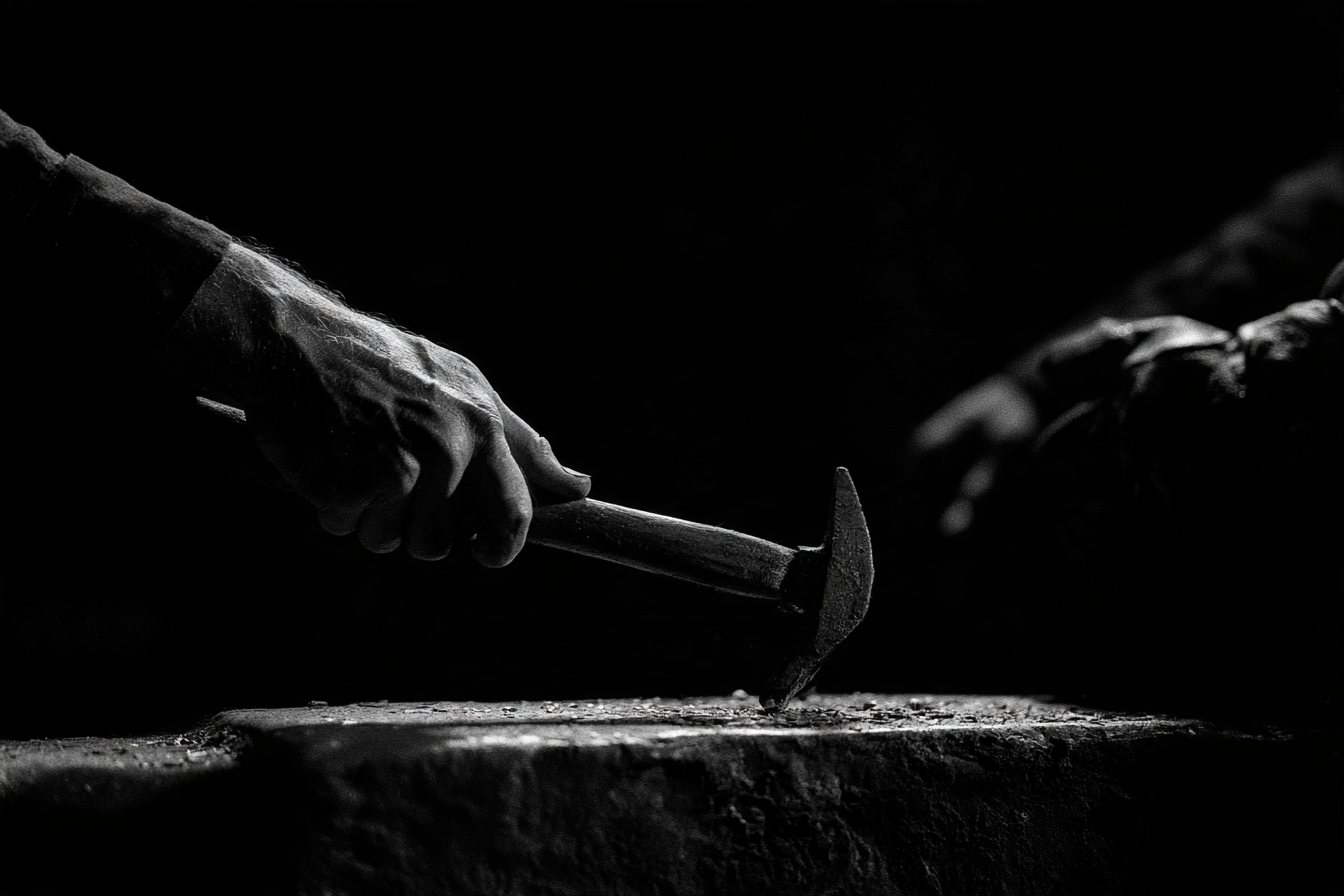
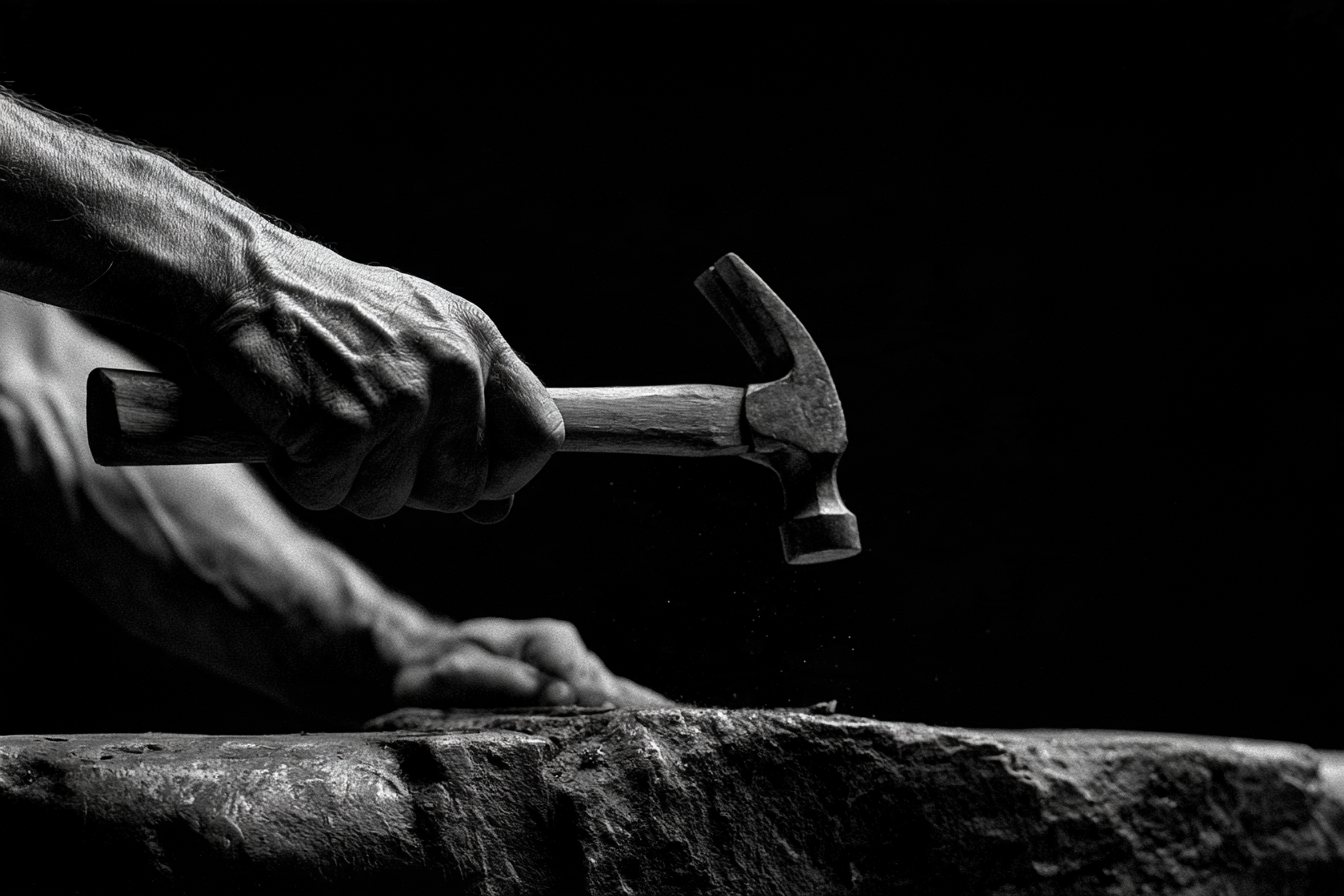
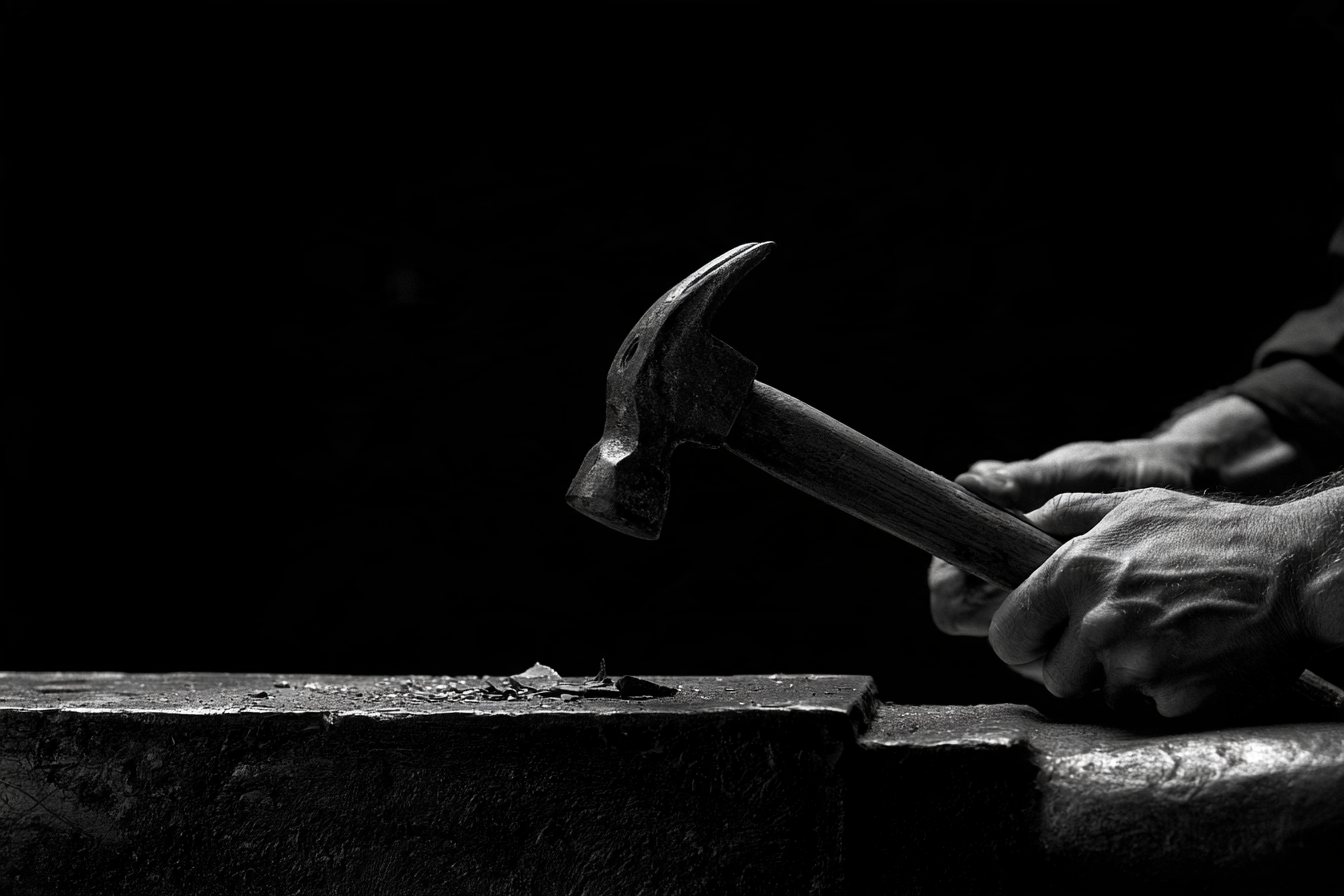
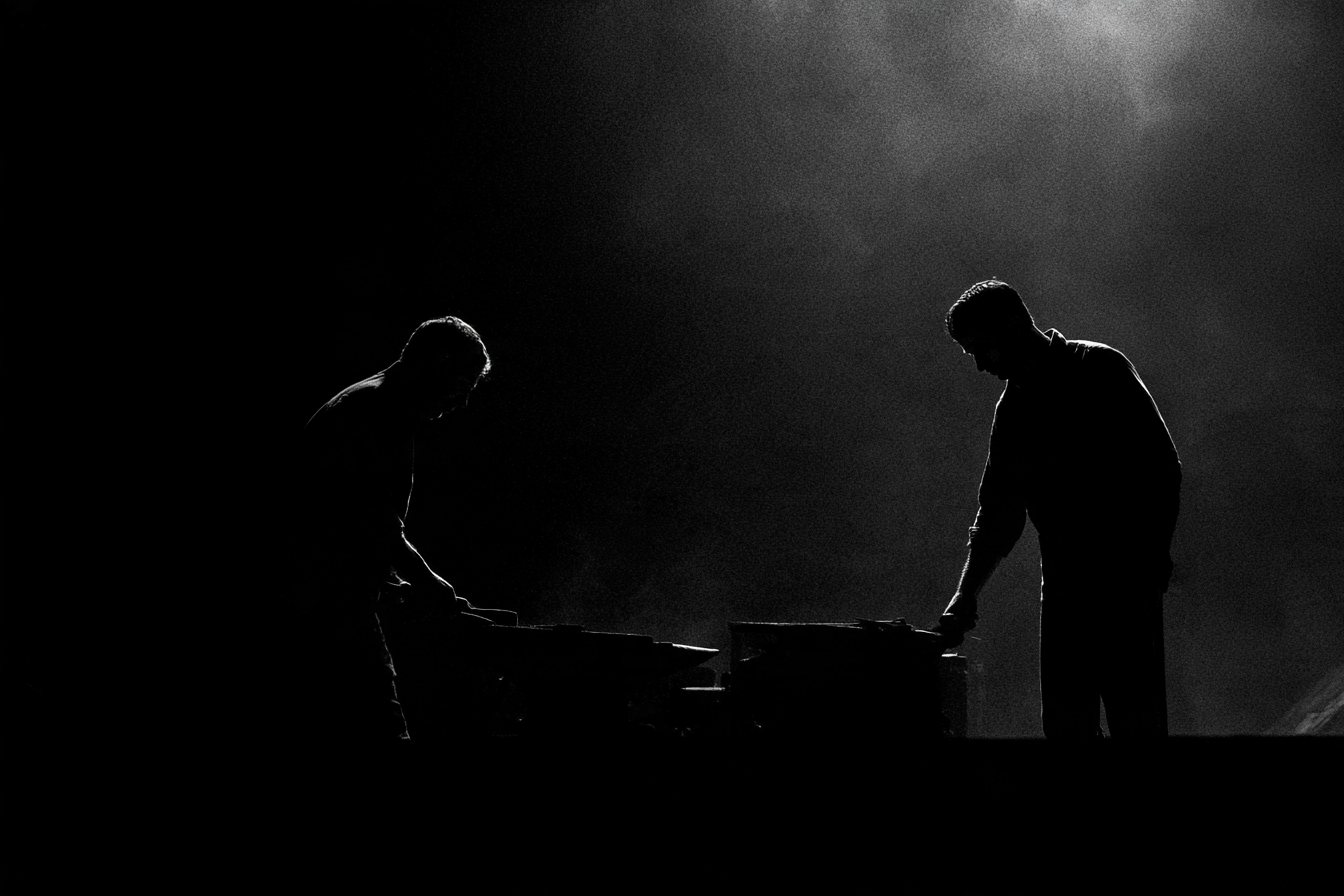
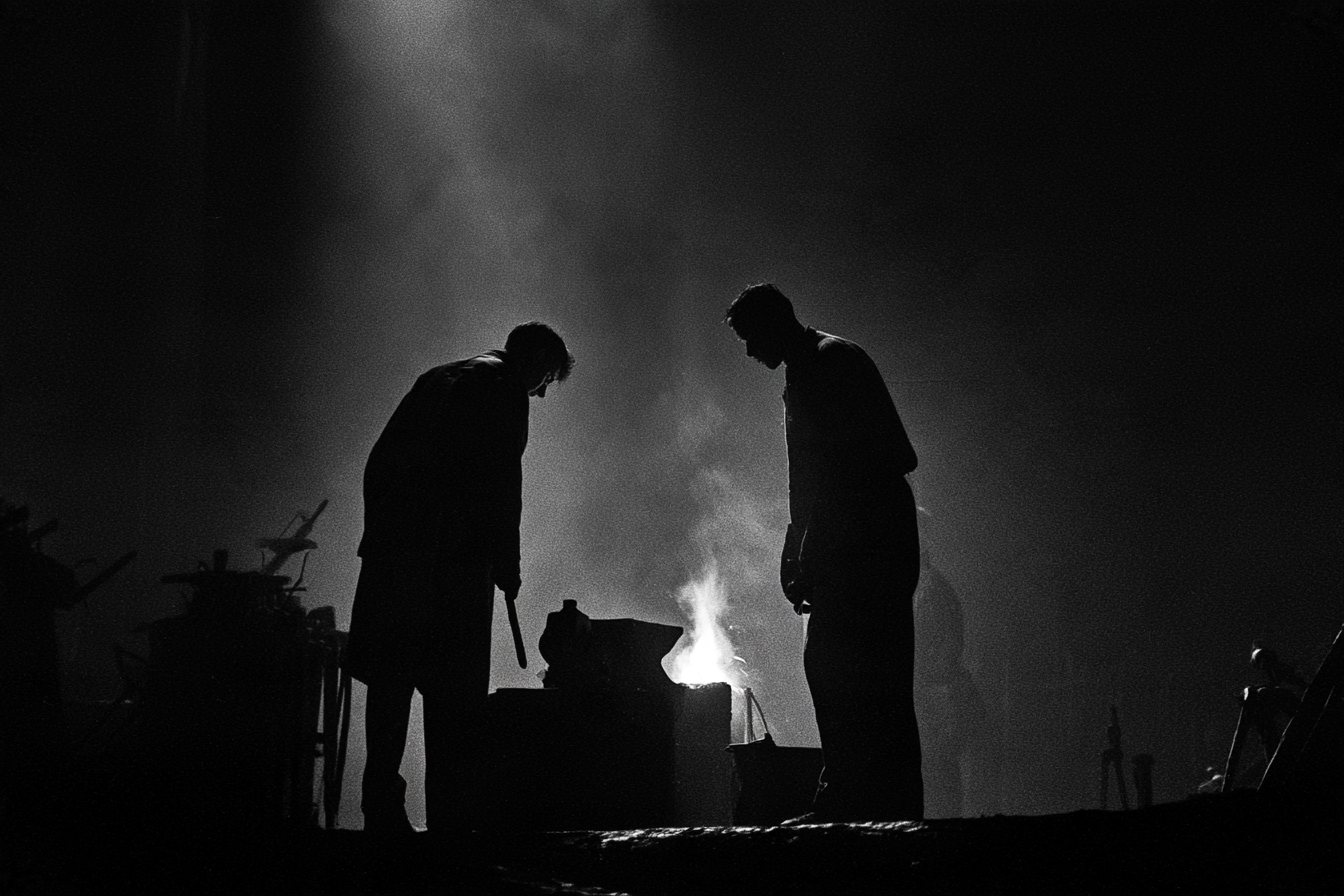
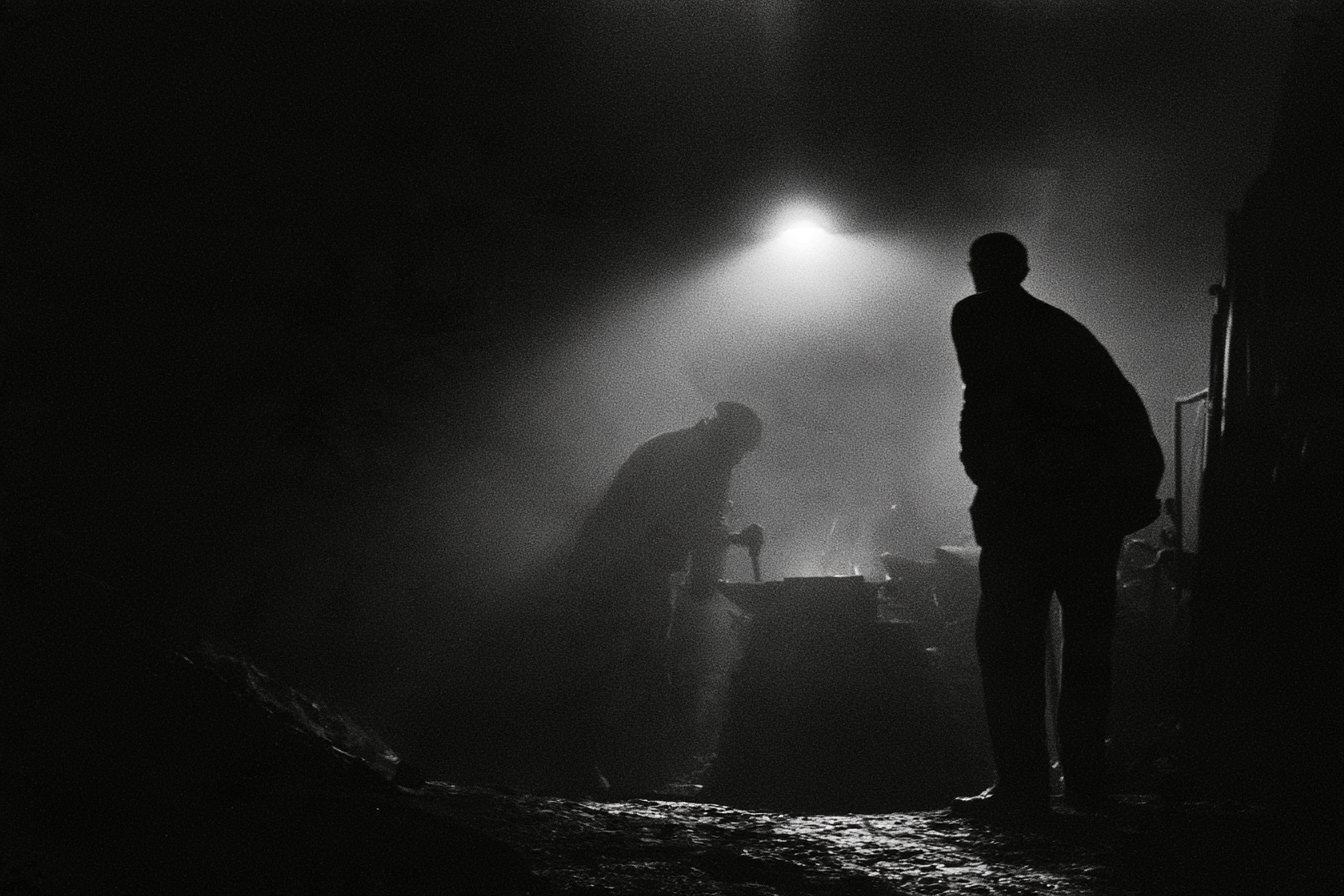
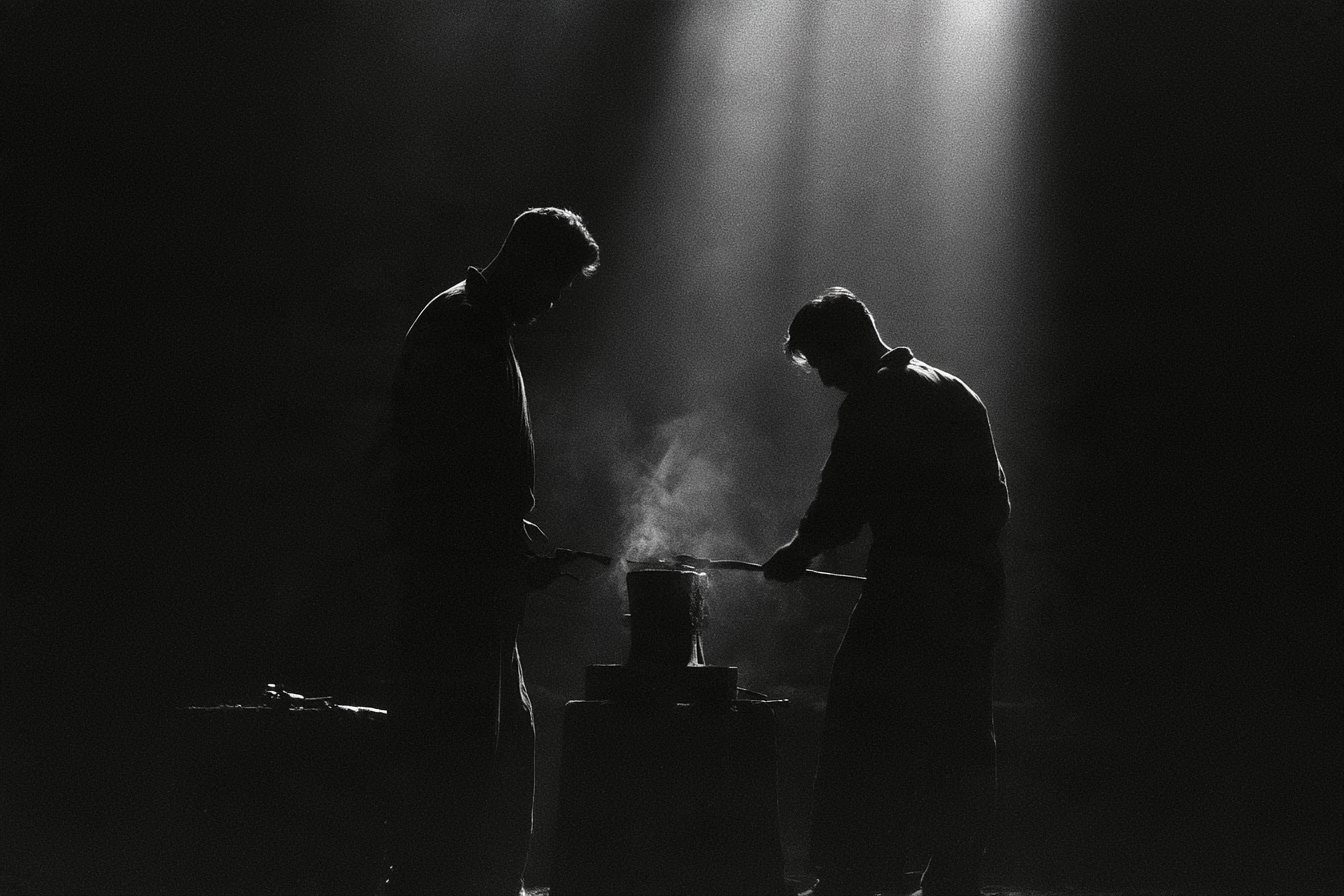
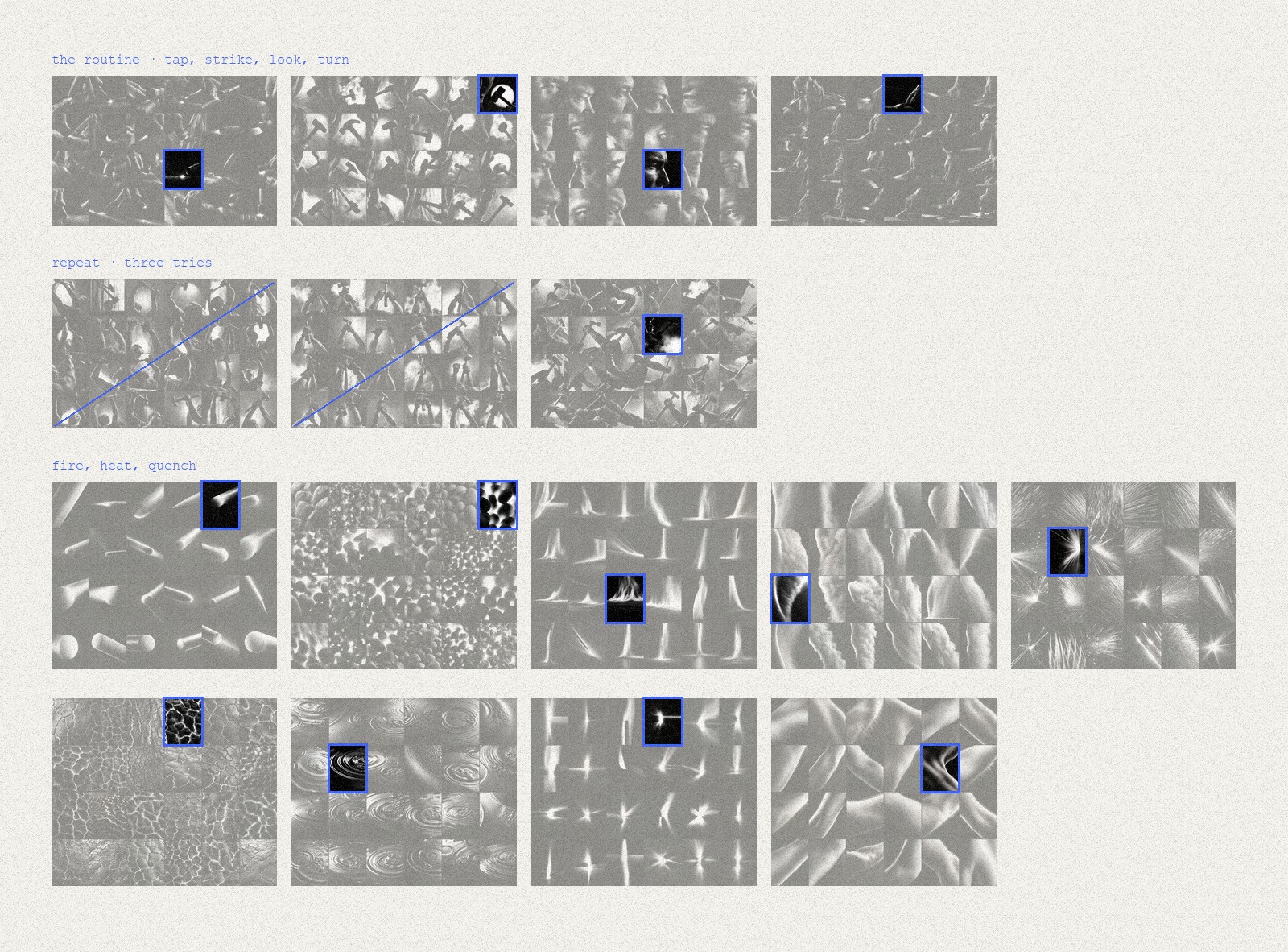
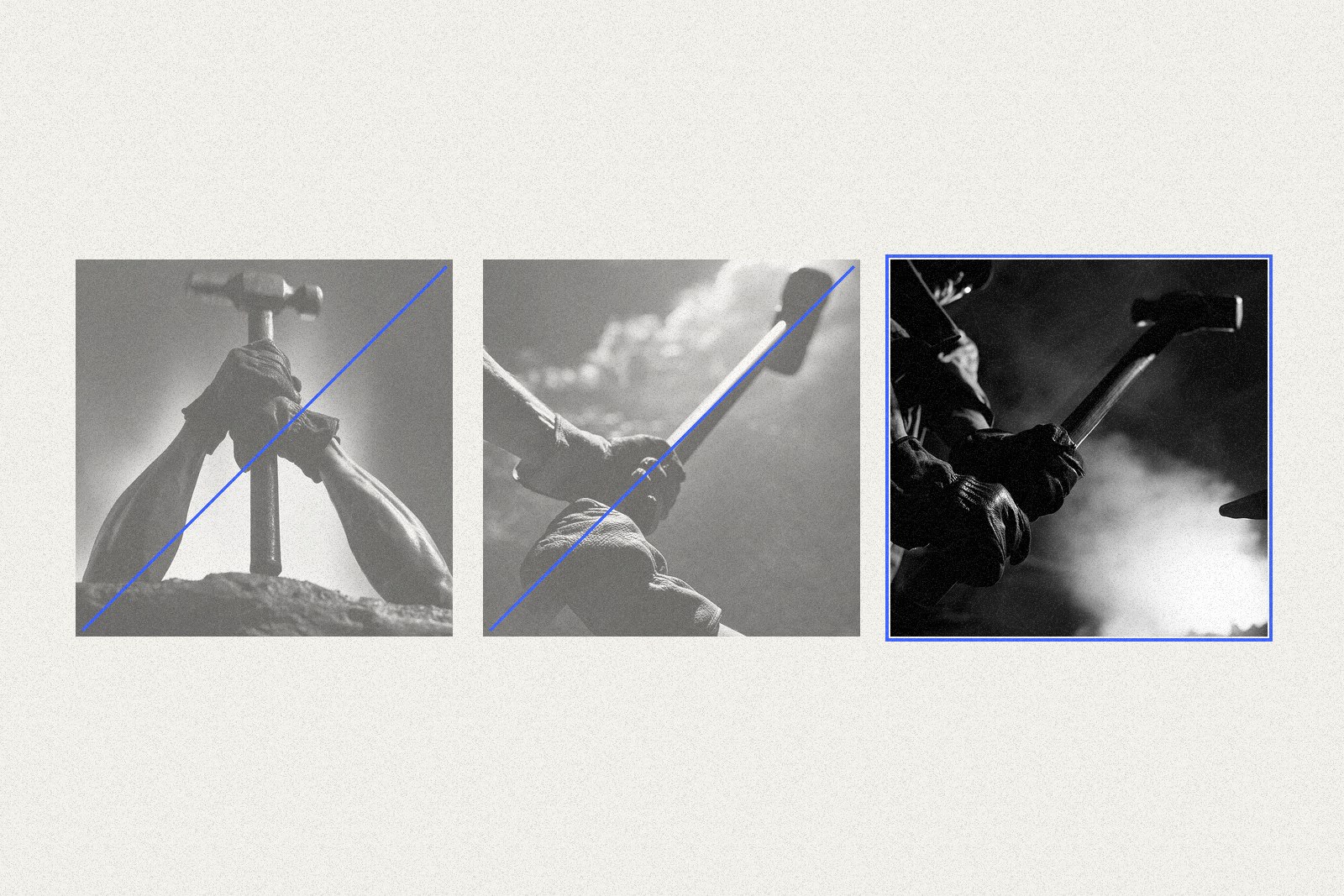
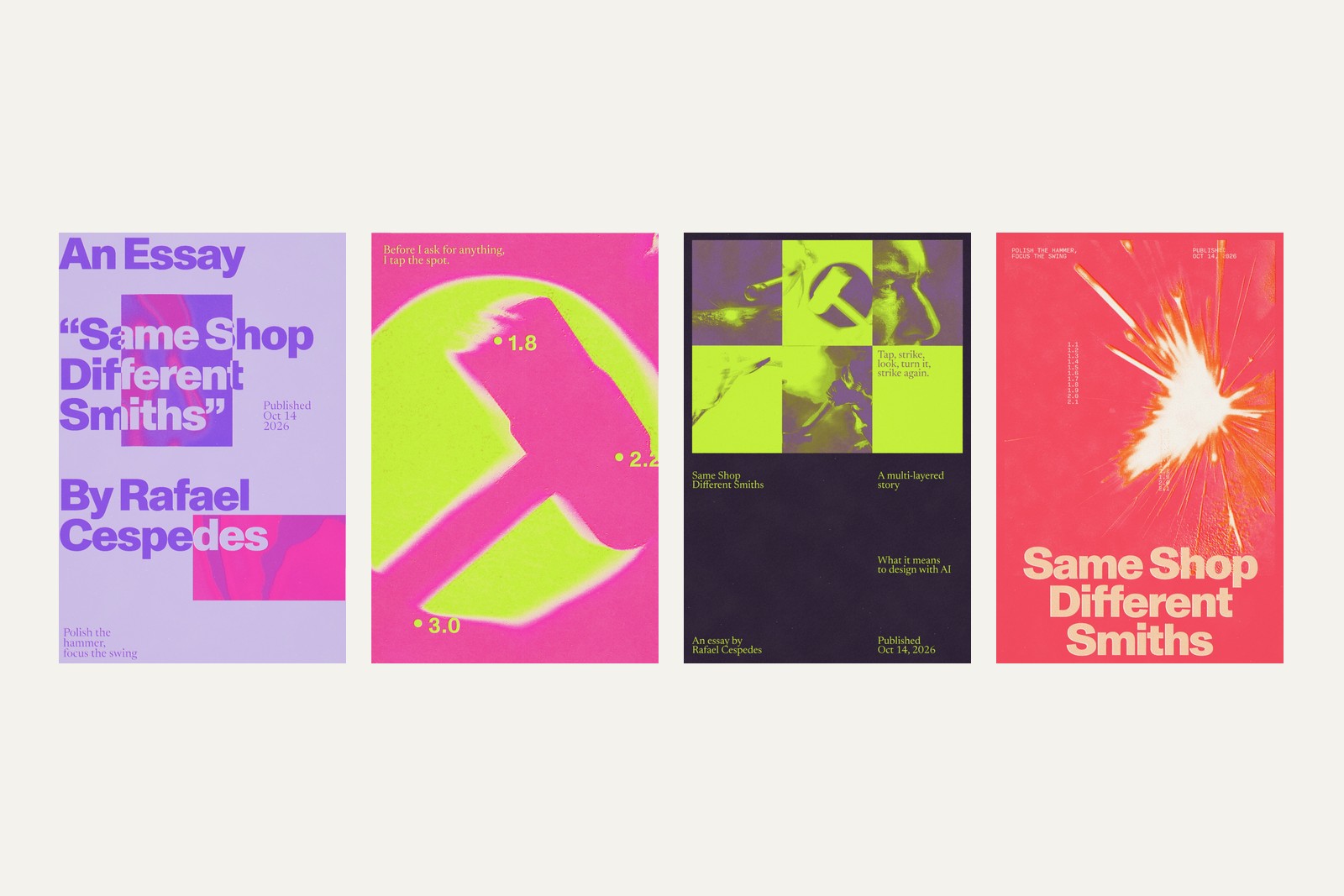
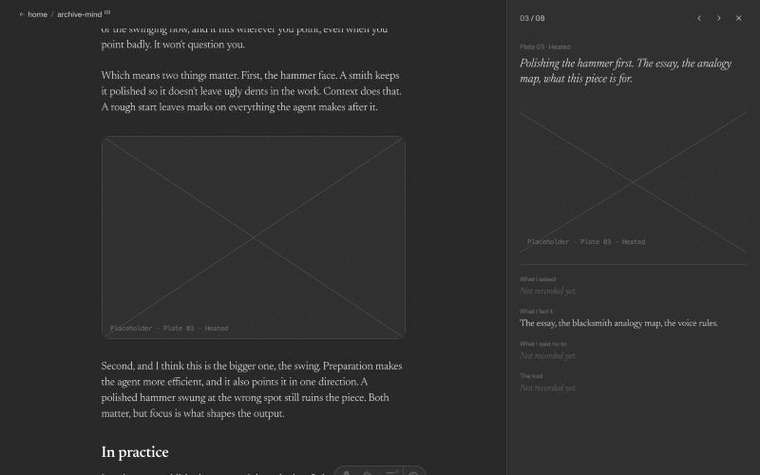
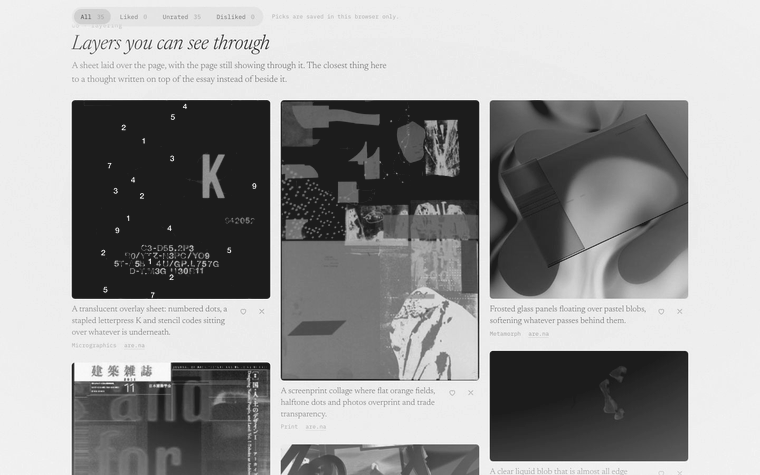
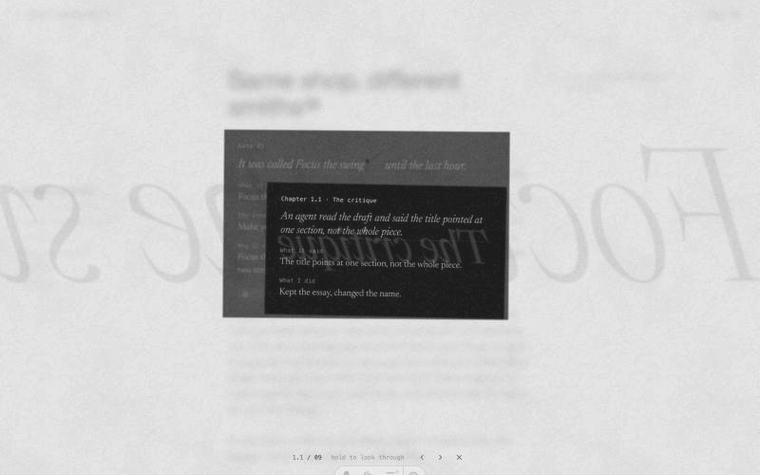
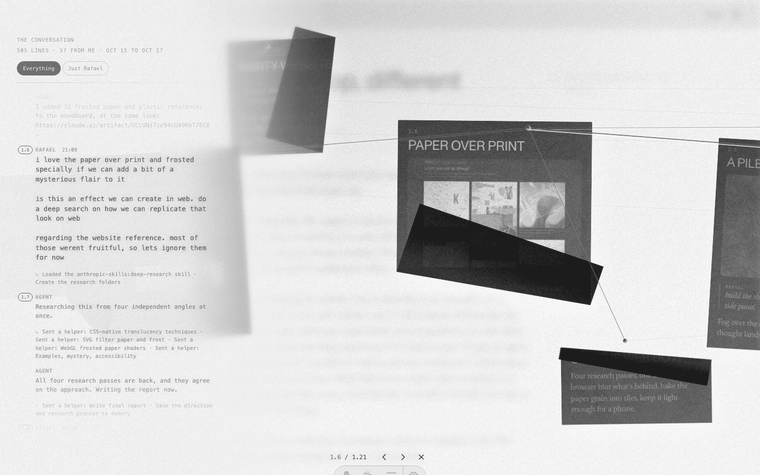
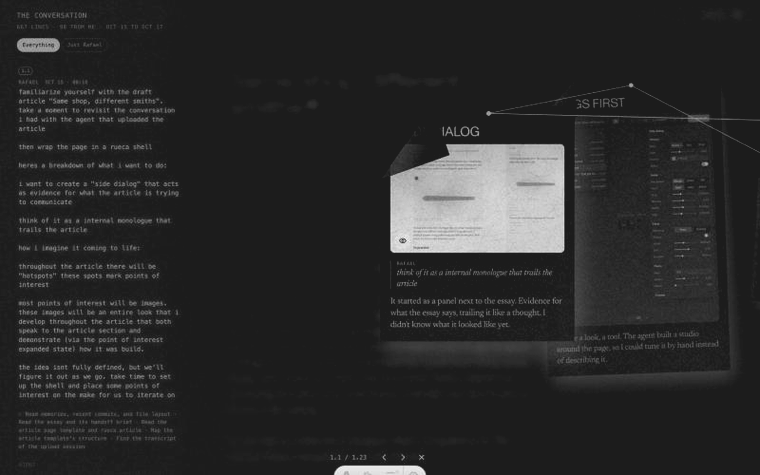
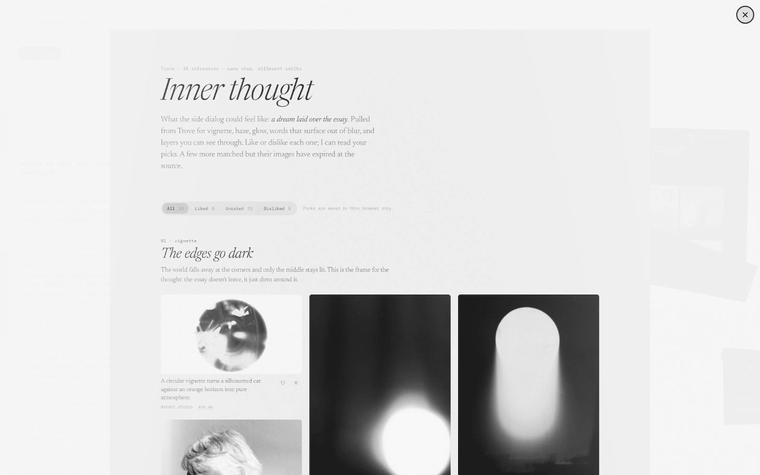
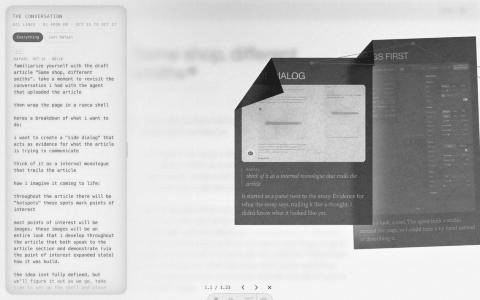
The pictures down this page were made the same way: a few lines and posters to aim with, research before anything, then rounds of options and no's.
Shaping while it's hot
Then the work starts, and this is where judgment comes in.
I usually ask the agent for options. Then I tell it what I like, and just as importantly, what I don't. The don'ts carry more than people expect. An agent can find things that look like my references. It can't know why I kept them, or what I rejected along the way, unless I tell it. Every "not this" narrows the next round.
It's what a smith does at the anvil. Tap, strike, look, turn it, strike again.
There's an art to this. Telling an agent why something doesn't work is a skill in itself. "I don't like it" gives it nothing to go on. You have to say what's wrong in a way it can act on, and that means understanding how an agent thinks: what it takes literally, what it fills in by itself, where it will overcorrect. That's a whole discipline, and I'm still learning it.
What surprised me is how much of this ends up being a reflection. The striker hits exactly where you tapped, so a bad strike shows you a bad call. If you have good judgment, you feel it straight away: a strike in the wrong place, one that wasn't as clean as it should have been. And over time the shop itself starts to reflect you. Your context, your references, your requests, your no's. Nobody else's shop looks like yours.
That's a big part of why it's been such a good teacher. It doesn't tell me what's right. It shows me what I asked for, and I get to see whether I was right.
My bench
This is where Trove and Rueca come in. Trove keeps the hammer polished. Rueca is how I forge tongs. Every smith's bench looks different, and it should. I'm only showing mine so you can see why it's arranged the way it is. You should go and make your own, or just use mine if you prefer. Rueca is open source.
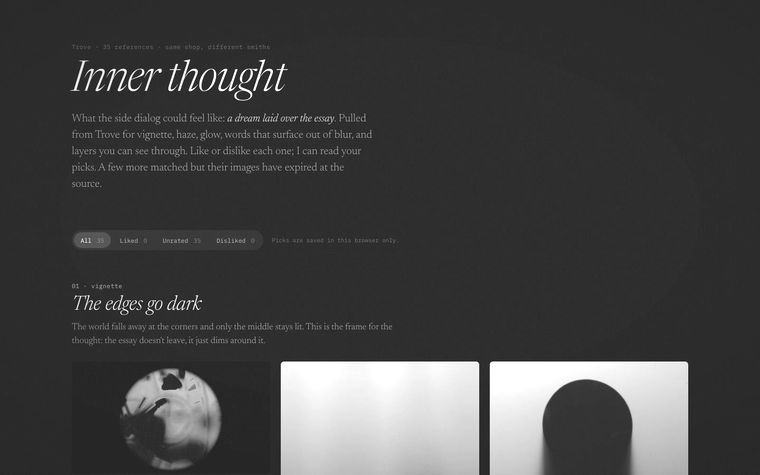
Trove is the first place I send my agent to look for references. It holds everything I've seen and liked: album covers, sounds, colors, logos, textures, renderings, resources, techniques. Things I already decided were good, which means the agent starts from a place I believe in instead of the average of the internet. I have over 3,000 artifacts there, and it's still nowhere near big enough yet.
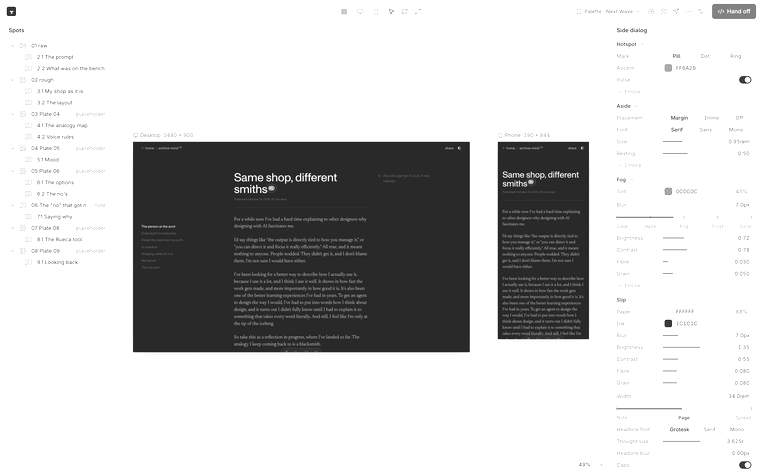
Rueca is the newer one. The name is Spanish for spinning wheel. It's a skill that takes a prototype and spins it into a tool: an inspector with sliders and knobs, a timeline, layers, presets, undo, export, and a simpler view a client can use. I kept building the same controls on every project, so I made the thing that makes them.
It exists because I think tooling should be malleable. Figma still works for me. It's just a choice now, one tool I call on when I need it. The tool I want depends on the piece I'm making. Is it a sword or a helmet? Does it need to be sharp, or durable? That changes how I make it, so it changes the tool.
What I think designers struggle with most is that we're not married to the tool anymore. I might make a tool for one use case and dump it, or keep it because it turned out to be reusable. For most of our careers the tool was the fixed thing and the work bent around it. Now it can go the other way.
I'm not alone in thinking about this. Mateja (@matejamarso) wrote recently that "true design craft is about feeling the product," crediting Josh Puckett (@joshpuckett) with a rethink of the whole iteration and tuning process. Nichy (@0xnichy) told me she'd found a new appreciation for natural language as a control, because sometimes what you're tuning is a feeling, and a set of numeric ranges only makes it more complex.
The funny part is that I built Trove and Rueca back to back and didn't see the connection at the time. Only now, with two tools on the bench and designers around me doing the same kind of thing, did I stop and ask what's actually happening. I think I'm in the middle of becoming a blacksmith with my own shop. Trove and Rueca aren't the end point. They're the first two tools in it.
The fun part
I keep pushing on this for one reason, and it has nothing to do with defending AI or any of the arguments around it. Working this way has made me feel more creative than I have in years.
Go back to the smith for a second. A smith loves their tools because they made them. The love isn't in keeping them. It's in making them. The tongs fit their hand because they forged them to, and everything that comes off the anvil carries a bit of them. Making your own tools, and then making work that comes straight out of them, feels like the most creative part of the whole thing. Maybe that's personal to me.
It takes some rewiring. We've spent our careers learning one tool's way of doing things, and it takes a while to stop reaching for it. It pays off: I'm learning more, and I see my own thinking more clearly. But what I care about most is the fun.
If you can imagine it, you can probably make it, and that's a new idea for designers. A lot of us struggle to even picture how a control should work, because we've only ever used the ones we were given. Now you can have any control you want.
So here's where I've landed. The shop is open to everyone, and the tools are cheaper and more personal than they've ever been. Two smiths in the same shop will still make different things.
If you're building your own shop too, or think I've got the analogy wrong, I'd like to hear about it.